
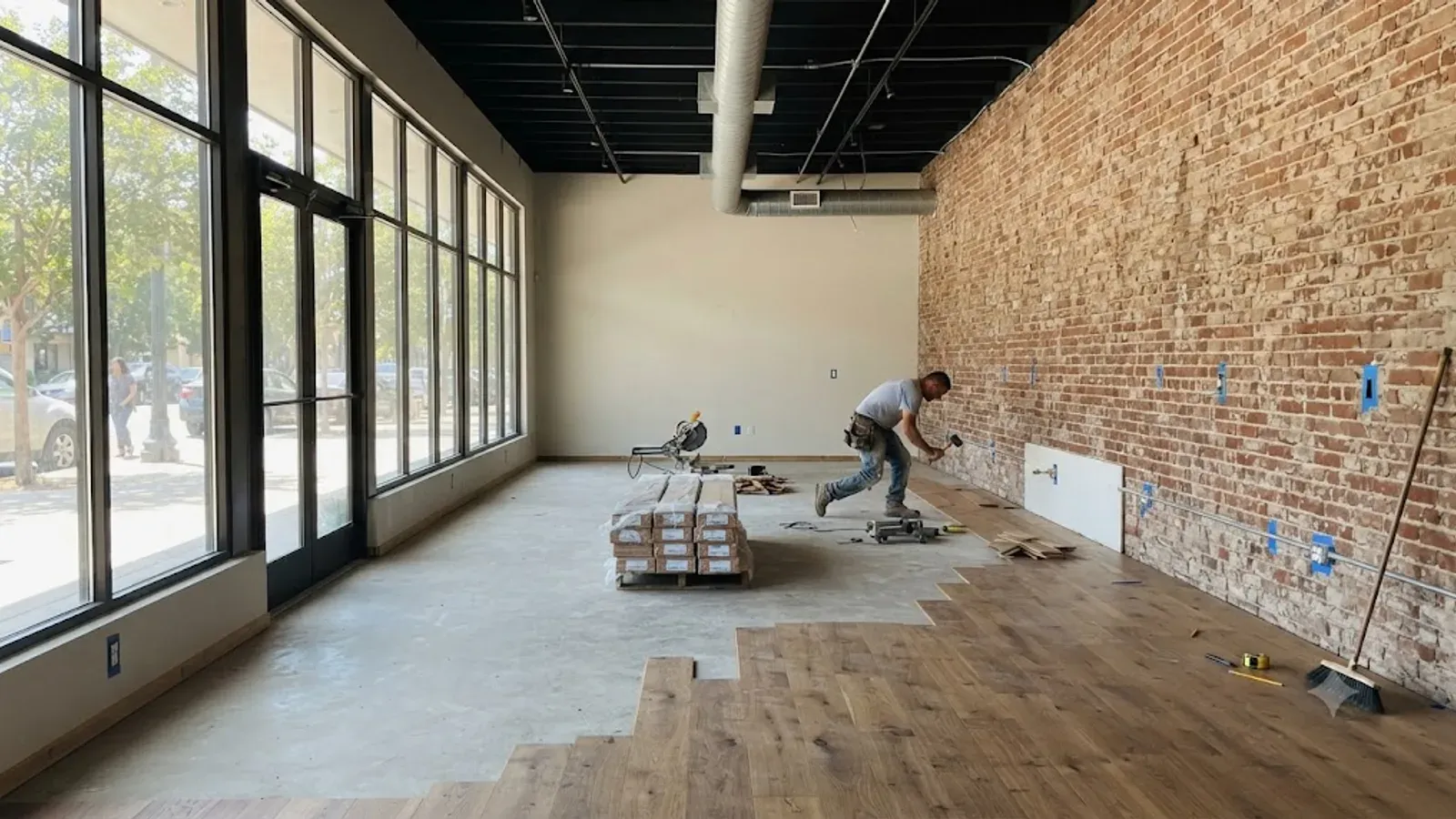
Commercial Wood Flooring in Downtown Bakersfield, CA
Bakersfield Premium Wood Flooring provides professional wood flooring in downtown Bakersfield, CA — commercial installation, hardwood refinishing, dustless sanding, subfloor leveling, and repair for restaurants, retail spaces, offices, and residential conversions. Downtown work is as much a scheduling problem as a flooring problem, and we plan it that way.
A dining room cannot be closed for a week. A law office cannot have solvent odor on a Monday. So downtown jobs get sequenced around your hours rather than ours — sand Friday night, coat Saturday, coat again Sunday morning, open Monday.
Downtown Building Stock After the 1952 Earthquake
Downtown's building inventory has a hard dividing line running through it. On July 21, 1952 a magnitude 7.5 earthquake struck Kern County, and Bakersfield came through comparatively well. The aftershock on August 22 did not spare it — a 5.8 centered on downtown killed four people and heavily damaged the historic structures at the core of the city.
What that means seventy years later is a mix. Some pre-war buildings survived and were repaired, some were reconstructed, and a lot of the block faces are 1950s replacement construction. For a flooring contractor that is not trivia, it is a prediction about what is under the finished floor.
Pre-war survivors typically have plank subfloor over heavy timber joists, sometimes with the original fir or maple still in place under three later floor coverings. Post-quake replacement buildings are more likely to be slab on grade, which pushes any wood floor toward glue-down engineered and makes a moisture test mandatory.
We have found original maple under vinyl composition tile under carpet under laminate in the same downtown suite. Four floors deep. It is worth the hour it takes to core through and look before anybody specs a new floor.
Commercial Floor Specs for Restaurants, Retail and Offices
A restaurant dining room takes more traffic in a month than a living room sees in five years, and it takes it in shoes, with chair legs dragging, under grit tracked in from the sidewalk. Residential finish will not survive it, and there is no point pretending otherwise to win a bid.
For commercial work we use waterborne finishes with a cross-linking hardener added, typically three coats and sometimes four in an entry or a service aisle. It costs more per square foot and it is the difference between recoating annually and recoating every four or five years.
Species and cut matter more here too. White oak outperforms red oak on abrasion and handles moisture better, which is why we spec it for anything near a bar, a bus station, or a kitchen doorway. Quartersawn and riftsawn cuts move less across their width, which keeps seams tighter in a room where the HVAC runs hard.
Then there is the sequencing question nobody thinks about until it is a problem: fixed seating, bar footrails, and shelving standards. Flooring goes under them or it does not, and changing that decision midway costs real money. We get it settled at the estimate.
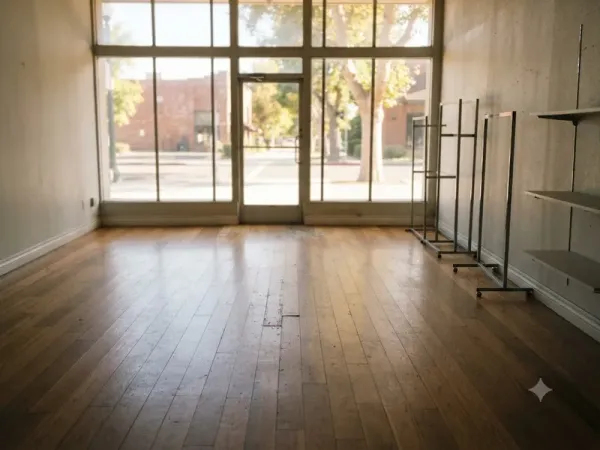
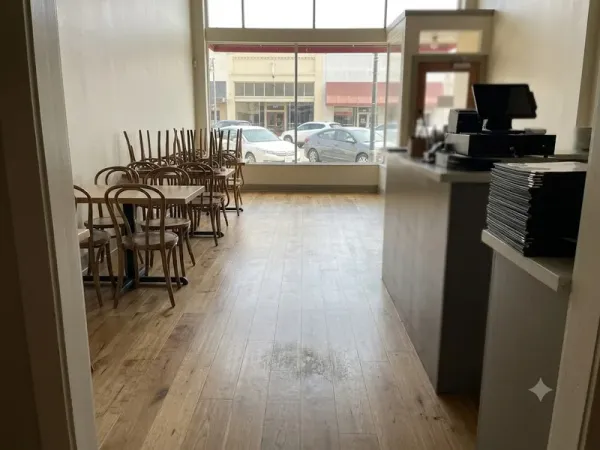
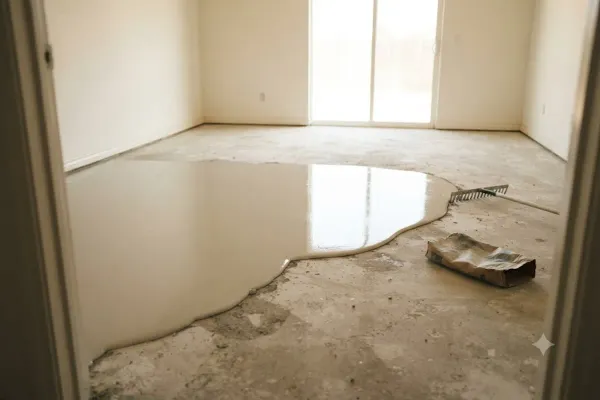
Working Around Tenants, Hours and the Street
Downtown means neighbors on both sides and often above. Sealed containment is what lets the business next door stay open while we sand, and it is why the HEPA collector goes on the sidewalk or in an alley rather than inside the space.
Loading is its own puzzle. Metered parking, narrow alleys, and no freight elevator in most of these buildings means material has to be scheduled rather than just delivered. We handle the permits and timing, but it is one reason downtown estimates carry a mobilization line that a suburban job does not.
The work is completely different a few miles west in Seven Oaks , where the buildings are newer, the slabs are flatter, and the conversation is about wide plank and wear layers rather than what is hiding under four layers of old floor covering.
For residential conversions in downtown buildings — and there are more of them every year — the flooring question usually comes down to sound. A wood floor over a timber-framed second story transmits footfall to whatever is below it, so we spec an acoustic underlayment as a matter of course and tell you the assembly rating before you sign.
Downtown Pricing and Timelines
Commercial refinishing runs $3.25 to $5.50 per square foot with a commercial-grade finish system. New engineered plank glued to a downtown slab is $7 to $13 installed. Moisture testing and slab prep are line items, not assumptions.
A typical restaurant dining room of 1,200 to 1,800 square feet can be sanded and coated over a weekend if the schedule is set up right and the space is genuinely empty when we arrive. The single most common cause of a blown weekend schedule is furniture that was supposed to be moved and was not.
For anything phased — a retail floor done in halves so the store stays open — we build the sequence into the estimate with the transition detail spelled out, so you know exactly which half is off limits on which day.
Downtown Bakersfield Wood Flooring Questions
Can you refinish a restaurant floor without closing for a week?
+
Is there original wood under my downtown building's floor?
+
What finish do you use for commercial traffic?
+
Do I need a moisture test on a downtown slab?
+
Can you work around adjacent tenants?
+
Free Estimates for Downtown Commercial Floors
Tell us your hours and your square footage and we will build a schedule around them, then quote it with prep and finish broken out. Mon-Fri 7am-5pm, Sat 8am-2pm.