
Hardwood Floor Repair and Patching in Bakersfield, CA
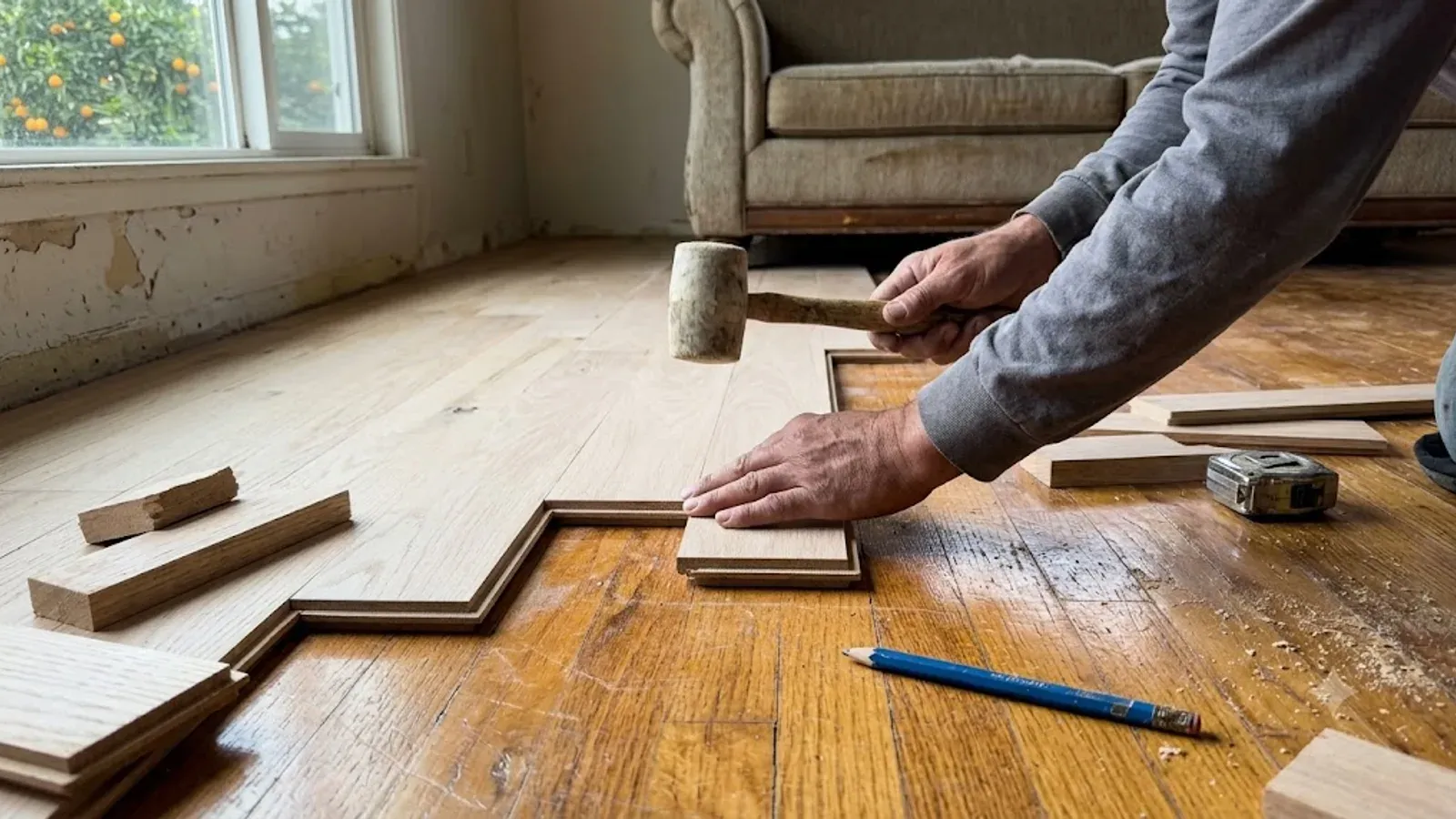
Bakersfield Premium Wood Flooring specializes in hardwood floor repair and patching in Bakersfield, CA, with a salvage inventory of period fir and oak built up over 19 years specifically so older floors can be patched with wood that actually matches. We lace boards in one at a time rather than dropping in a rectangle.
A patch is judged by whether you can find it. That is the whole standard. Getting there means matching species, cut, width, thickness, and grain direction, staggering the end joints into the existing field, and then refinishing the full room so the new wood and the old wood end up the same color.
Hardwood Floor Patching After a Wall Removal
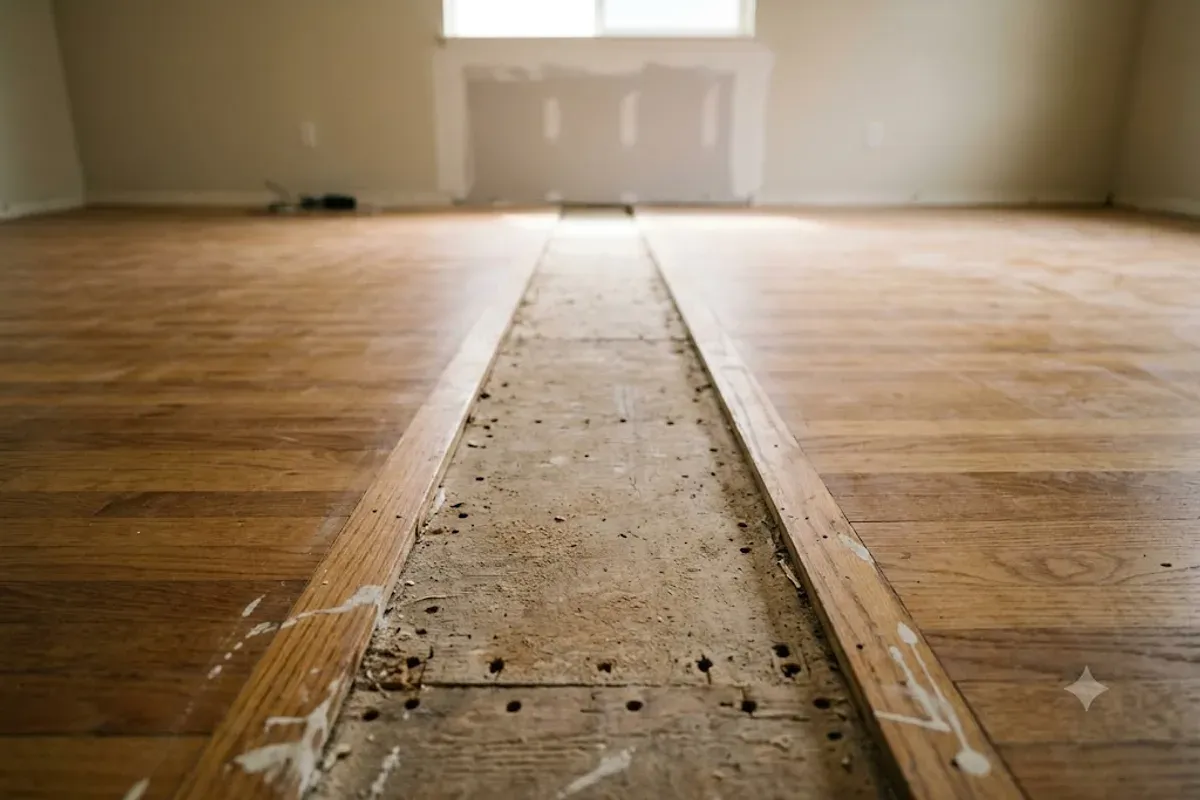
Opening up a wall between a kitchen and a living room is the most popular remodel in Bakersfield right now, and it leaves the same problem every time: a bald strip of subfloor two to six inches wide running across the room, dotted with the nail holes from the old bottom plate.
Worse, the flooring on either side of that strip almost never lines up. Two rooms were laid separately, sometimes years apart, often running in different directions. So the patch is not just filling a gap, it is reconciling two floors that were never meant to meet.
How we handle it depends on the offset. If the two fields run the same direction and the board courses are close, we lace the strip in and stagger the joints out several feet in both directions so the eye never finds a seam line. If the fields run perpendicular, the honest fix is usually a feature strip or a threshold, and we will show you both options rather than pretending a lace will look invisible when it will not.
Then there is the height difference. Rooms added at different times often have subfloors that are a quarter inch apart. That gets shimmed or planed before any flooring goes down, because a patch that is proud of the field will telegraph through the finish and catch a mop for the rest of its life.
Pet Stain Repair and Board Replacement
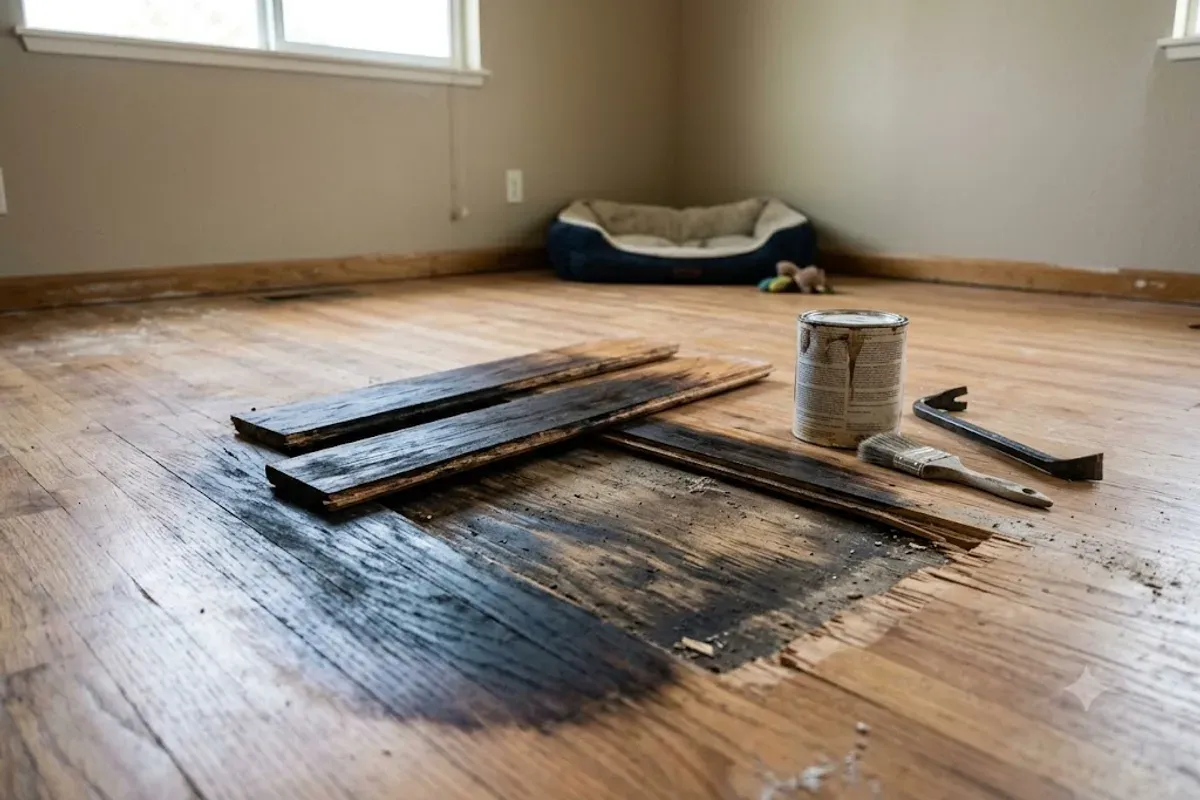
Pet urine is not a surface problem. It goes through the finish, saturates the board, and soaks into the subfloor beneath it, where it reacts with tannins in the wood and turns everything black. That black is in the fibers, not on them.
Sanding removes roughly a millimeter of wood. That handles a coffee spill. It does nothing for a stain that has gone all the way through a three-quarter-inch board, and the common outcome of trying is a floor with pale gray shadows in the bedroom that everybody notices and nobody mentions.
So we replace. The affected boards come out, the subfloor underneath gets cleaned, treated with an enzymatic cleaner, and then sealed with a stain-blocking primer so nothing bleeds back up through the new wood. Then new boards go in, laced with staggered joints, and the whole room gets sanded and refinished.
One warning worth giving before you spend money: if the pet is still having accidents in that spot, wait. We have replaced boards for people twice in three years. Fix the behavior or the flooring, in that order, or you are buying the same repair again.
Matching Wood on Older Bakersfield Floors
The pre-1950 houses in Oleander-Sunset, Westchester, and the older parts of Oildale are mostly vertical-grain Douglas fir, milled in widths that nobody stocks anymore. You cannot walk into a supplier and buy a 2 1/4 inch vertical-grain fir board with a 1920s milling profile.
That is why we keep salvage. Stock pulled out of closets, from under old cabinet runs, from rooms being converted, and from tear-outs where the floor was going in a dumpster. When a bungalow needs fourteen boards, that inventory is the difference between a real match and a compromise.
When salvage runs out, we mill. Buying rough stock and running it down to the right width and thickness with a matching tongue and groove profile costs more and takes longer, and on a period floor worth restoring it is usually still cheaper than replacing the whole field.
For newer oak floors the matching problem is different and mostly about cut. Red oak and white oak look nearly identical unfinished and completely different stained. Plainsawn, riftsawn, and quartersawn have entirely different grain figures. Get either one wrong and the patch reads instantly, no matter how good the carpentry was.
How a Patch Job Runs
- 1
Identify Species and Cut
We pull a board or look at a cut end to identify species, cut, width, and thickness. Guessing from a photo is how patches end up visible.
- 2
Source or Mill the Wood
Matched from our salvage inventory where possible, or milled from rough stock to the original profile when the size is no longer made.
- 3
Remove Damaged Boards
Plunge-cut down the middle of each board, split it out in sections, then clear the tongue and groove so the neighbors stay intact.
- 4
Repair What Is Underneath
Subfloor inspected, cleaned, and where there was pet damage, treated and sealed with a stain-blocking primer before anything new goes down.
- 5
Lace the New Boards In
Staggered end joints running out into the existing field, groove trimmed so boards drop in from above, fastened the way the original floor was.
- 6
Sand and Finish the Room
The whole room sanded as one plane and coated together, so the patch and the original floor come out identical in color and sheen.
Hardwood Patching — Common Questions
How much does hardwood floor patching cost?
+
Can you make the patch invisible?
+
My floor is old. Can you still find matching wood?
+
Do you have to refinish the whole room after a patch?
+
Can pet stains be sanded out instead of replacing boards?
+
Get a Free Floor Patching Estimate
Text or email a photo of the damage taken from floor level in daylight, and we will tell you what we think we are looking at before we come out. Mon-Fri 7am-5pm, Sat 8am-2pm.