
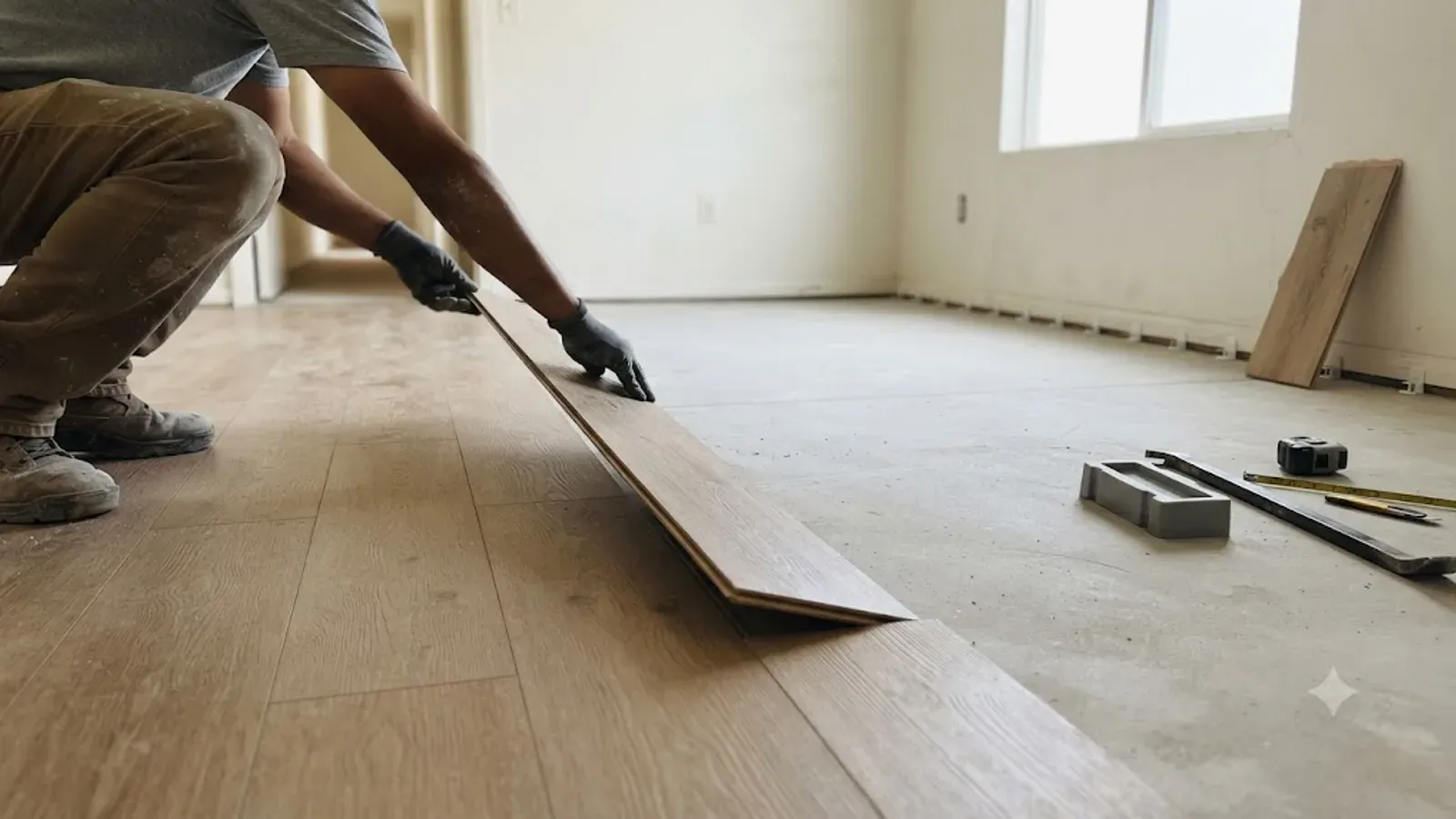
Luxury Vinyl Plank Flooring Installation in Bakersfield, CA
Bakersfield Premium Wood Flooring installs luxury vinyl plank flooring in Bakersfield, CA over the same prepped, leveled, moisture-tested substrate we would give a hardwood job — because LVP hides less than people think and telegraphs a bad slab just as fast.
We are a wood flooring company recommending vinyl, which should tell you something. Sometimes wood is the wrong answer: a rental turnover, a laundry room, a slab that tests too wet to glue hardwood to, a household with three large dogs and a realistic view of the future.
Luxury Vinyl Plank Construction and Wear Layer Specs
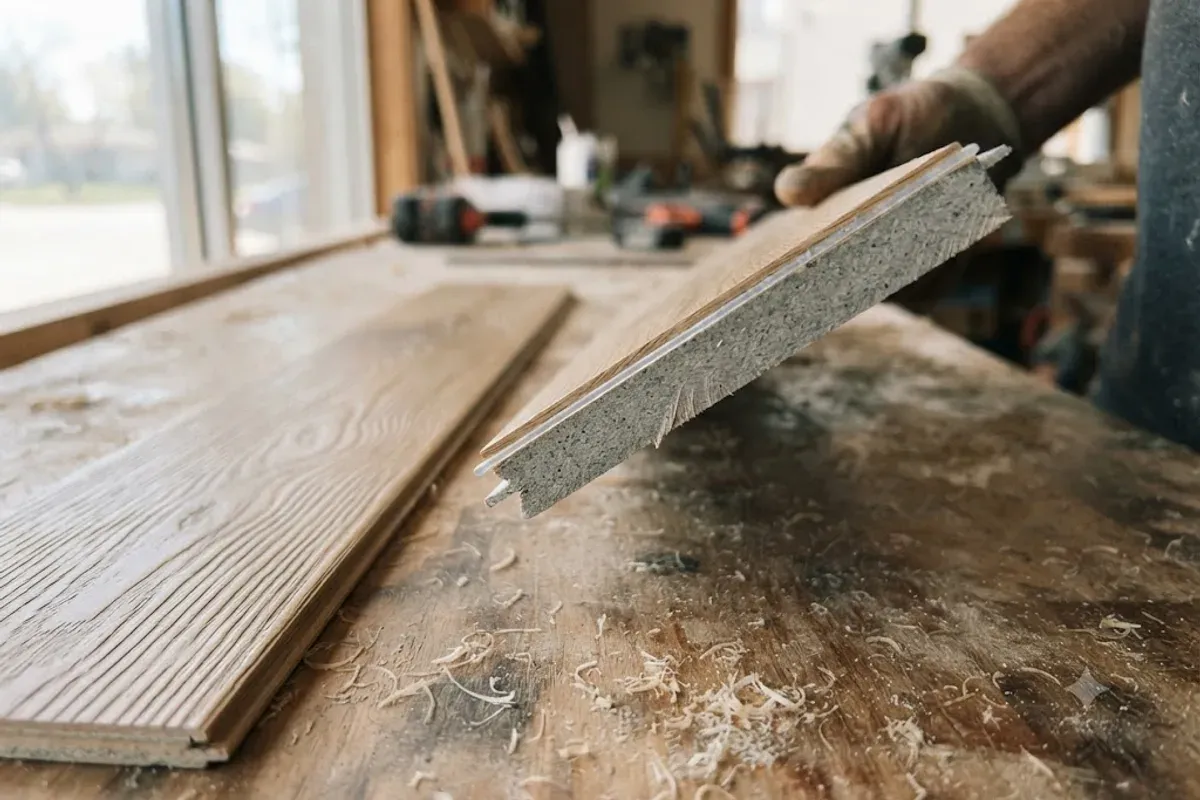
Rigid core LVP is a layered product. A dense mineral or wood-composite core for stability, a printed film layer that carries the wood look, and a clear urethane wear layer on top that takes all the abuse. Some products include an attached pad on the underside for sound.
The wear layer is the number that predicts how the floor ages, and it is measured in mils. Six mil is builder-grade and belongs in a bedroom nobody uses. Twelve mil is a reasonable residential minimum. Twenty mil handles a busy household with pets, and 28 mil is light commercial. The price difference between 12 and 20 mil is small. The lifespan difference is not.
SPC and WPC are the two core types you will see. SPC has a stone-plastic composite core — denser, more dimensionally stable in heat, less forgiving of an uneven substrate. WPC has a wood-plastic composite core — a little softer and warmer underfoot, a little more prone to movement in a hot room. In a Bakersfield house with 36 days over 100 degrees and west-facing glass, we lean SPC almost every time.
The other thing to look at is the embossing. Cheap LVP has a repeating print pattern that becomes obvious once it covers a whole room — you start seeing the same knot four times. Better product uses more unique plank faces and embossing that registers to the print, so the texture lines up with the grain you are looking at.
Where LVP Beats Wood in a Bakersfield Home
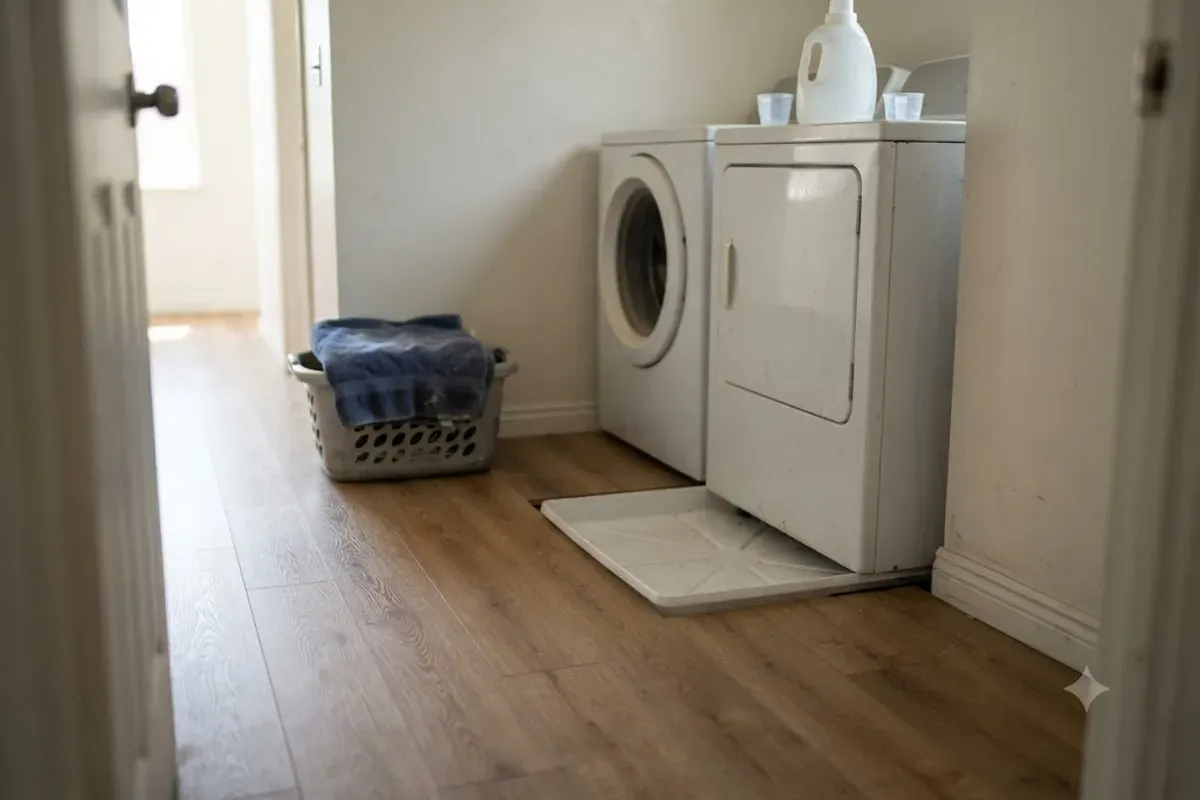
Laundry rooms, first. A washing machine hose fails eventually, and when it does the difference between wood and rigid core LVP is a mop versus a claim. Same logic in a mudroom or a bathroom.
Rental turnovers, second. A wood floor in a rental gets refinished between tenants and that is a real cost every few years. A 20 mil LVP floor takes a decade of tenants and gets damp-mopped. For an investment property the math is not close.
Third, and this is the Bakersfield-specific one: slabs that fail a moisture test. When a calcium chloride test comes back above 5 pounds, gluing hardwood down means adding an epoxy moisture barrier, which is expensive. A floating LVP floor over a proper vapor barrier sheet handles that slab without the mitigation cost.
Where LVP loses is resale and repair. It does not add value the way real hardwood does, it cannot be refinished — when the wear layer is gone the floor is gone — and it can dent under a heavy point load like a piano leg or a refrigerator. It also fades in direct sun, which matters on a south or west-facing room with big glass and no coverings.
LVP Installation Over Slab and Wood Subfloors
The single biggest myth about LVP is that it forgives an uneven substrate. It does not. A floating rigid core floor bridging a dip in a slab will flex every time somebody steps on it, and eventually the locking edges fatigue and separate. The flatness requirement is the same as it is for glue-down wood.
Over a slab, our sequence is grind the highs, fill the lows, vacuum thoroughly, roll out a 6-mil vapor barrier where the product calls for one, then float the planks with a quarter-inch expansion gap at every wall and vertical obstruction. Rigid core expands and contracts with heat more than wood does, so that gap is not optional in a room that hits 90 degrees when the AC is off.
Over a wood subfloor, we screw down anything loose first, then float over the same underlayment. In a laundry or bath we will often glue rather than float, so a leak cannot migrate under the whole floor and sit there.
Transitions are where cheap LVP jobs give themselves away. Doorways, thresholds to tile, the step down to a garage — each one needs a proper profile fitted and fastened, not a strip of quarter round hiding a bad cut. We also undercut door casings rather than scribing planks around them, which is slower and looks like it was always there.
How an LVP Install Runs
- 1
Substrate Assessment
Straightedge across the slab or subfloor and a moisture test. LVP does not forgive a wavy substrate any more than wood does, whatever the box says.
- 2
Product Selection
Core type and wear layer matched to the room, the traffic, and the sun exposure. We will tell you when 12 mil is fine and when you want 20.
- 3
Prep the Substrate
Grinding, patching, or self-leveling as needed. Old adhesive and bond breakers removed. Loose wood subfloor screwed down.
- 4
Acclimate the Planks
Boxes in the room for 48 hours at normal living temperature. Rigid core moves with heat rather than humidity, so the room temperature is what matters.
- 5
Layout and Undercut
Center line snapped, door casings undercut so planks slide beneath them, and planks racked so the print pattern does not repeat visibly.
- 6
Install and Trim
Floated or glued per the product and the room, quarter-inch expansion gap at every wall, then transitions and base fitted and fastened properly.
Luxury Vinyl Plank — Common Questions
How much does LVP installation cost in Bakersfield?
+
Is luxury vinyl plank actually waterproof?
+
Will LVP work over my uneven concrete slab?
+
Does LVP fade in the sun?
+
You are a wood flooring company. Why do you install vinyl?
+
Get a Free LVP Estimate
Tell us the room, the traffic, and whether it is over slab or joists, and we will quote the right wear layer instead of the cheapest one. Mon-Fri 7am-5pm, Sat 8am-2pm.